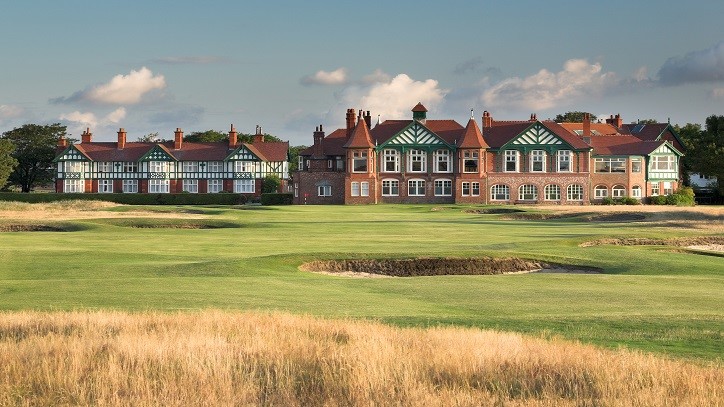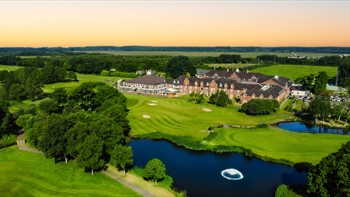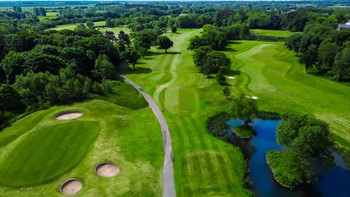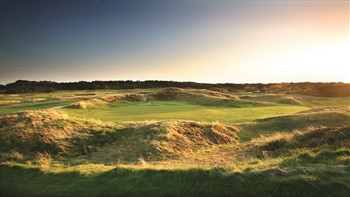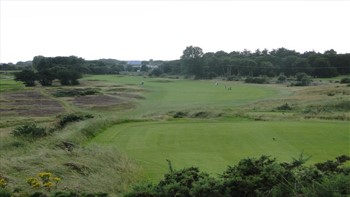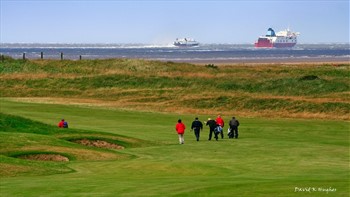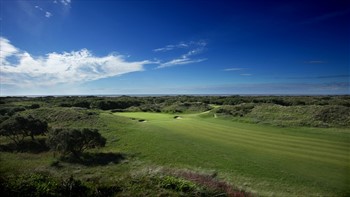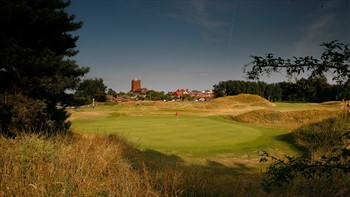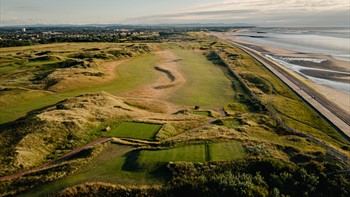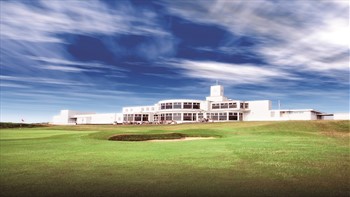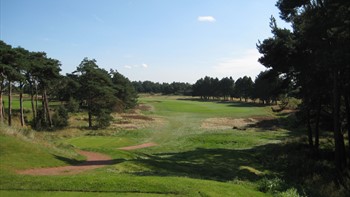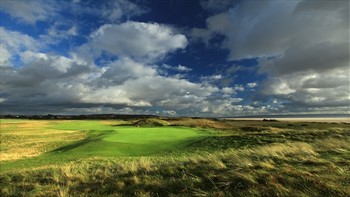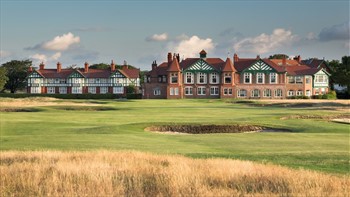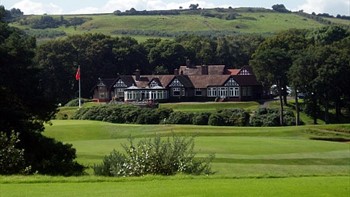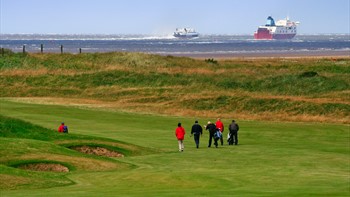
The 135th Open Championship is returning to the spiritual home of English
Hoylake is not the oldest course in England - Westward Ho! holds that particular accolade - but since 1869, when it was established, the Royal Liverpool club has played a central role in the development of the game south of the border.
The club can lay claim to a host of notable firsts:
- In 1885, it held the first Amateur Championship, won by A. MacFie.
- It staged the first international match between England and Scotland in 1902.
- In 1921, it was the venue for the first international between Britain and America, a match that inspired George H. Walker to inaugurate the Walker Cup the following year.
- Four years later, in 1925, it staged the inaugural English Amateur Championship, won by T.F. Ellison.
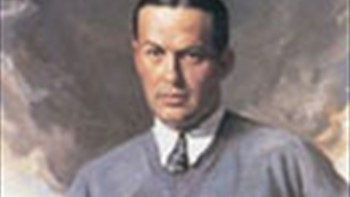
Hoylake has also hosted The Open on a total of ten occasions; the first in 1897, just three years after the Championship was played in England for the first time. The players who have won The Open at Hoylake are ten of golf's best-known names from the past and include Bobby Jones, who as an amateur in 1930 achieved the original Grand Slam - winning the Open and Amateur Championships of both Great Britain and the United States of America in the same year.
Royal Liverpool Open Championship Winners
1897 Harold Hilton (314)
Harold Hilton, a local amateur, born in West Kirby, won the first Open held at Hoylake, closing with a 75 to pip James Braid by a single shot. It was his second Open victory, having also claimed the title five years earlier at Muirfield.
Hilton led Braid by one shot at the halfway stage before both men stuttered in the third round, Braid to an 82 and Hilton to an 84. Hilton then shaved nine shots off that total in the final round and then whiled away the time playing billiards before leaving the clubhouse to watch Braid narrowly missing a birdie putt on the last that would have tied his 314 total.
Hilton also won four Amateur Championships and is the only British player ever to have won the US Amateur, his victory coming in 1911 at Apawamis where he defeated F. Herreshoff on the 37th hole of the final. In later life, he edited both Golf Illustrated and Golf Monthly magazines.
1902 Alex Herd (307)
In 1902 Alex Herd became the first player to win The Open using a rubber-cored golf ball when he won the Championship at Hoylake in 1902. It was to be his sole Open win but he did finish second on four other occasions, in 1892, 1895, 1910 and 1920, and also won the British Professional Matchplay title twice, in 1906 and 1926.
When Herd arrived at the 1902 Open, he had already professed to a disliking for the new rubber-cored, or Haskell, ball, but, after a practice round with John Ball, he was persuaded to try them out.
The story of the Championship was one of a battle between Herd, James Braid and Harry Vardon, who started with a 72, despite putting two balls out of bounds on the first. In the end, Herd recorded rounds of 77, 76, 73 and 82, finishing one shot ahead of his two nearest competitors on 307. Harold Hilton, the 1897 champion, was among the group that finished in sixth place on 314,
1907 Arnaud Massy (312)
Frenchman, Arnaud Massy, became the first foreign winner of The Open when he won the Championship at Hoylake in 1907.
Massy learned to play the game left-handed while at home at Biarritz but then switched to right-handed when he moved to North Berwick in 1902. He made his first appearance in The Open in 1905 when he finished fifth. He came sixth in 1906 but then 12 months later registered rounds of 76, 81, 78, and 77 in windy conditions to finish two shots ahead of J. H. Taylor. Tom Vardon, brother of Harry, and local professional G. Pulford, shared third place on 317 while James Braid and Ted Ray were fifth one further shot behind.
Four years later, Massy almost won a second Open title, losing out to Harry Vardon in a 36-hole play-off at Royal St George's
1913 J.H. Taylor (304)
John Henry Taylor defied strong wind and driving rain to win his fifth and last Open title at Hoylake in 1913.
Taylor, who was born in Devon and was the club professional at Royal Mid-Surrey, only qualified for the Championship after holing a six-foot putt on the final green of the Qualifying event but then strung together rounds of 73, 75, 77 and 79 to finish eight shots ahead of Ted Ray on 304.
A member of the famous Great Triumvirate, Taylor was the first of the great English professionals, winning five Opens, and finishing runner-up on five other occasions. As late as 1924, when The Open returned to Hoylake, the 53 year-old's six rounds, including two Qualifiers, were the lowest in the field. He finished fifth, behind American Walter Hagen.
1924 Walter Hagen (301)
America's Walter Hagen won his second Open in the space of three years when he claimed the 1924 Championship at Hoylake.
Like JH Taylor before him, Hagen nearly failed to pre-qualify having faltered to a first round of 83, but having survived that scare, he posted rounds of 77, 73, 74 and 77 to finish a single shot ahead of Reg Whitcombe on 301. Englishman, Frank Ball, and American, MacDonald Smith, shared third place on 304, with 1913 champion, J.H. Taylor, a further three shots behind in fifth.
Hagen's win started a run of American victories which did not come to an end until 1934 when Henry Cotton took the title at Royal St George's.
1930 Bobby Jones (291)
American, Bobby Jones, achieved the second leg of his unique Grand Slam when he recorded rounds of 70, 72, 74 and 75 to claim a two shot victory over compatriots, MacDonald Smith and Leo Diegel, at the 1930 Open at Hoylake.
Shortly before, Jones had been in tremendous form while winning The Amateur at the Old Course, St Andrews. However, in contrast, his victory at Hoylake was not achieved without a considerable struggle. In the third round, he dropped eight shots to par in the first three holes. Then, in the fourth, he took a seven at the eighth, five of them having been almost level with the green in two.
Jones' win was his third in The Open, having also lifted the title at Royal Lytham and St Annes in 1926 and St Andrews in 1927. It was also his last appearance in the Championship because, soon after completing the Grand Slam with wins in the US Open and US Amateur, he retired with "no world's left to conquer."
1936 Alf Padgham (287)
Alf Padham, one of the quiet men of British golf, holed a 12-foot putt across the final green to defeat compatriot, James Adams, at the 1936 Open Championship at Hoylake.
Padgham, from Surrey, won three tournaments in the lead up to the Championship and he kept that fine run of form going long enough to post rounds of 73, 72, 71 and 71 to finish one shot ahead of Adams and two in front of Henry Cotton and the fast-finishing Frenchman, M. Dallamagne, who closed with a 69. Percy Alliss, Tom Green and Gene Sarazen shared fifth place on 291.
Padgham's sole victory in the Open came after finishing third in 1934 and runner-up in 1935. Later in 1936, he was elected captain of the Professional Golfers' Association.
1947 Fred Daly (293)
Fred Daly was one of the best players on the British circuit in the years immediately after the second World War but his win in the 1947 Open did have something to do with the weather.
The popular Daly, from Portrush, Co Antrim, was fifth out for his last round and so was able to post a 72 for a four round aggregate of 293 and then sit and watch as a strengthening wind caused havoc for his nearest challengers. In the end, Daly finished one shot in front of R. W. Horne and American amateur Frank Stranahan and two ahead of Bill Shankland. Vic Ghezzi, Dai Rees, Harry Busson and Alf Perry were among the sizeable number of competitors who saw their scores balloon into the high 70s and low 80s as the wing reached its peak.
Perry was also helped by two outrageous putts in his final round - one at the 13th where he recovered from two bad shots by holing out from 20 yards and another at the 18th where he knocked it in from 12 yards.
1956 Peter Thomson (286)
Australia's Peter Thomson created a major slice of history when he won the 1956 Open at Hoylake - he became the only man to win three titles in a row during the whole of the 20th century.
Thomson won at Royal Birkdale in 1954 and St Andrews in '55 and he completed the hat-trick of victories with a four round aggregate of 286 that saw him finish three shots ahead of Belgium's Flory Van Donck and four in front of Argentina's Roberto de Vicenzo, who was to be star of the show when the Championship returned to Hoylake eleven years later.
The Australian went on to win five Open titles. He was equal sixth on his debut in 1951, second in '52 and second equal in '53 before winning three times in a row between 1954 and '56. He was also second in '57 and won in '58 before posting a fifth victory at Birkdale in 1965.
1967 Roberto de Vicenzo (278)
Argentina's Roberto de Vicenzo is living proof that success comes to those who wait. He won 140 professional tournaments and over 20 national championships in 14 different countries but it was not until his 19th appearance in The Open that he finally won the Claret Jug.
De Vicenzo held a two shot lead after a record-equalling third round 67 but then had to withstand a serious challenge from Jack Nicklaus before posting a 70 that saw him finish two shots ahead of the American on 278. England's Clive Clark and South Africa's Gary Player were tied third on 284.
The Argentinean's shot of the championship came at the par-5 16th where he hit a glorious spoon (3-wood) across the corner of the out-of-bounds and into the heart of the green to set up a crucial birdie. Later, after the prize giving and celebrations, De Vicenzo left Hoylake in a van belonging to his Scottish caddie, Willie Aitchison and, in all the excitement, they forgot to take the trophy with them.
The following year, de Vicenzo's bid to win The Masters came to an unfortunate end when he failed to spot that his marker, Tommy Aaron, put him down for a four instead of the three he scored on the 17th hole in the final round. He signed for a 66 instead of a 65, a mistake that cost him the chance of returning the following day for an 18-hole play-off with Bob Goalby.